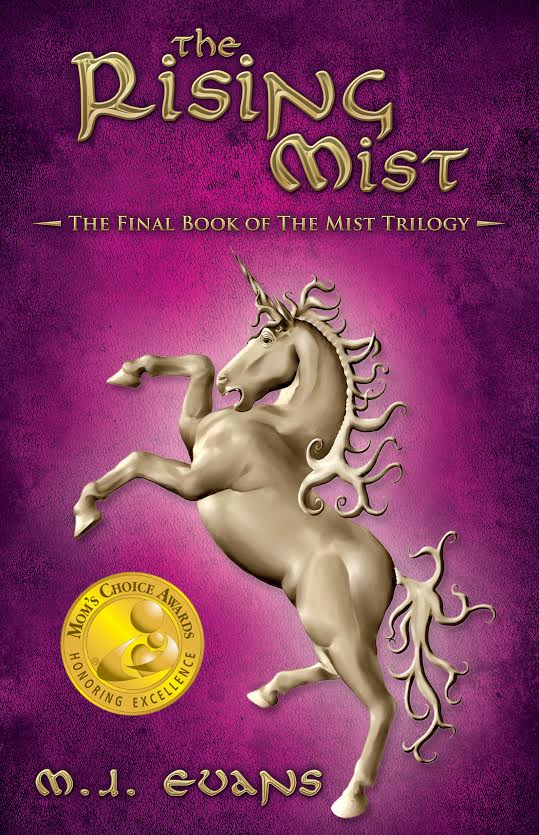
This Blog is dedicated to the Noble and Great horses in our lives and throughout history. Visit the land of the unicorns in Behind The Mist, the horse lover's fantasy for pre-teens to adults.


Order here now:


http://behindthemist.com/

Thursday, April 13, 2017

PREVENT THE SPREAD OF DISEASE!

Show season is upon us and horses get exposed to more than just other horses. Unfortunately our wonderful friends can also be exposed to new viruses. There have already been two verified cases of Equine Herpes virus...one in Texas and one in Nevada.
It can spread quickly through a stable. 
Here are the early signs of EHV:


Here are some prevention tips:
1. Make sure your horse is up to date on all vacines. An otherwise healthy horse is less susceptible to getting sick.
2. Do not share water buckets, hay nets or other feeding/drinking equipment.
3. Do not submerge the water hose in the bucket when filling it.
4. Do not share tack or grooming equipment.
5. Avoid nose to nose contact between horses.
6. Do not tie your horse to rails or fences where other horses have been tied.
7. If you are concerned about your horse's health take its temperature. If it is over 101.5, call a vet immediately.
8. If EHV is in your barn, you will need to remove all bedding, disinfect all stalls and aisle ways, clean and disinfect all trailers and grooming equipment as well. 


GREAT NEWS!
My new book - The Stone of Courage, Book 2 of the Centaur Chronicles will be released Saturday, April 15th! Available on my website: www.dancinghorsepress.com or wherever books are sold. It is available on Amazon and Barnes & Noble.


Friday, March 31, 2017

THE ROYAL MEWS-Stable Fit for a Unicorn!


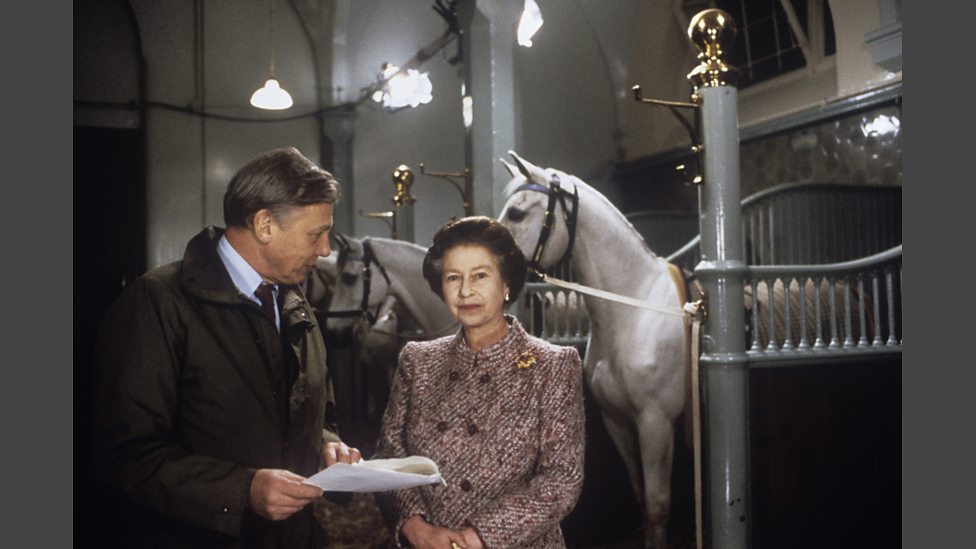
Since 1760, one of the finest stables anywhere in the world has been "The Royal Mews" next to Buckingham Palace in London. "Mews" is the British term for barn or stable originally referring to the barn where falcons and hawks were kept during the moulting (mewing) season. King George III built the original stable and carriage house when he moved into his new home in the Palace. It has been upgraded by several monarchs since that time and still serves as the home for the royal horses and carriages. It is no longer the small stable it once was. It is now a grand structure housing a riding school, a forge, and living quarters not only for horses but for their handler's and the handler's families as well.

The Royal Mews is the department that looks after all royal road travel whether by car (boring) or horse-drawn carriage (cool!)

The day at the stables begins at 6 a.m.. Horses are fed and brushed. Stalls are cleaned. Horses are regularly exercised and trained in carriage driving. Thirty of the Queen's Windsor Greys and Cleveland Bays live there. The Windsor Greys are not a breed but horses that are selected for color and temperament. Cleveland Bays are a breed, originating in the Cleveland District of Yorkshire. The breed is considered the oldest non-draft English breed, developed by the church of England to carry goods and people to remote areas of the kingdom. This breed of horse is very rare. There are only about 500 of them in the world.

 If you are lucky enough to visit London, be sure to take a tour of the Mews. Here is a map to show you where it is located:


I am so excited to tell you that my new book, The Stone of Courage-Book 2 of the Centaur Chronicles, will be released in just 2 weeks! It is the continuation of the Award-winning series that started with The Stone of Mercy. The new book will be available wherever books are sold on April 15th. Autographed copies are available now on my website: www.dancinghorsepress.com


Thursday, February 23, 2017

MY ONE-EYED UNICORN


About two years ago, I noticed that my wonderful Thoroughbred, Kit, that I have had for twenty years and trained and competed up through second level in Dressage, was doing some strange things. On trails, he was running into trees and running up on the heels of other horses. This is not normal for him. He had become a perfect trail horse and is the cover boy for all three of my trail guide books:

 He had also become afraid of getting in the trailer...now this is a horse who had ridden in the trailer a couple of times a week for years! One day, while standing beside  him on his near (left) side he ran right over me! When I got up, I put my hand up to his left eye and he didn't even blink!

I called my vet and told him I thought Kit was blind. He said it was probably just a cataract that could be removed and he'd be fine. However, when he came to inspect his eye, he realized it was optic nerve damage. The cause????

So, my sweet Kit had to adjust to a world where half of it is missing. I had to learn to be his left eye and ride him while always being conscious of what he couldn't see.

About nine months ago, his eye started bulging out of the socket.

After X-rays and ultra sounds, we discovered that a large tumor was growing behind his eye, thus causing the blindness. We tried to shrink the tumor with steroids. This seemed to be working for a couple of months. But, eventually, the eye started bulging out again.

Fortunately for me, Colorado State University has a Veterinary school that specializes in cancer/tumor research. They agreed to take him. Thank goodness they did. Otherwise, I would not have been able to afford the surgery to remove the eye and the tumor.
This is Kit in his stall at CSU before his surgery.

You can see from the first two pictures that his eye is now gone and that he has healed well. We do not know the long-term prognosis. It turns out that my special horse also has a special tumor. There are only 6 recorded cases of horses with this type of tumor. One lived for 6 months, one lived for 6 years. So I really don't know what to expect. But I had to do what I could to give him a chance. I love this horse so much!

I am excited to announce that my newest book: "The Stone of Mercy, Book 1 of the Centaur Chronicles," won the Gold Medal/First place award for Juvenile/Young Adult Fiction from the Feathered Quill Awards!
This fantasy is about the land of Crystonia that has been without a ruler for a century and a half. By tradition, the rightful heir to the throne is the one who wears the Silver Breastplate. No one expected the breastplate to be given to a young Duende girl, a descendent of the Fairies who once populated the land. Now she must complete the breastplate by gathering the four Stones of Light! You can get an autographed copy on my website: www.dancinghorsepress.com It is also available wherever books are sold. You'd have fun reading it!


Monday, January 16, 2017

TO BLANKET OR NOT TO BLANKET


I live in Colorado and it is that time of year that I spend a lot of time putting on and taking off blankets. You see, Denver's weather is what I call Bi-Polar...bitter cold one day, shirt sleeves the next. This makes it hard for my poor horses's winter coats to know if they are really needed or not.

Horse people are always discussing that eternally significant question: Should I blanket my horse or not? I saw this funny post on facebook from Auburn University:


I thought it was pretty funny! I especially love the question, "Is your horse a wussy?" --Yes!--Your horse probably needs a blanket.

I have read all sorts of articles arguing one way and the other about whether or not to blanket a horse. Those opposed claim that the blanket will compress the natural thick winter coat and thus destroy the natural insulation it provides.

On the other hand, most articles said blankets would probably be best if the temperature is below 10 degrees Fahrenheit or the horse is not able to find shelter, especially from wind. Wind seems to be more of a factor than cold.


Of course, if your horse is old or sick, he would need a blanket.
If he is accustomed to being in a stable, he would need a blanket if suddenly put outdoors.
If he is clipped, obviously he needs a blanket in cold weather.

One result of blanketing is that it prevents the winter coat from getting as long and thick as it might otherwise become. This is good if a horse is being worked a lot in the winter so that he doesn't get over-heated and it becomes hard to cool him off. This is my situation. I take my horse from an unheated stable to a heated arena for my dressage lessons. Even though I blanket him, he gets quite sweaty during our lessons.

Another reason to blanket is to help keep the horse clean. Dust helps insulate the unblanketed horse but that means a lot more grooming to get ready to ride.

After my reading I concluded that when all is said and done, it is up to you! (With the noted exceptions listed above.)


Thursday, December 1, 2016

HAPPY DECEMBER!

Happy December! That means it is almost Christmas...YAY! I love Christmas. My husband is crazy about Christmas, too. He says the best thing, and maybe the only good thing, about having a horse-crazy wife is that it is easy to shop for Christmas gifts. All he has to do is get a gift card from the Dover Saddle Shop in our town of Parker, Colorado.

Here is my Christmas wish list:
1. Warm winter riding boots
2. Warm winter riding socks
3. Warm winter riding breeches
4. Warm winter riding jacket
5. Warm winter riding gloves

Do you see a pattern here?

If you need a gift idea for a horse-crazy kid or adult, pick an award-winning book from my website. I will autograph it and send it to you.  Click here: www.dancinghorsepress.com

May I suggest The Mist Trilogy for fantasy lovers ages 9 and up. You can buy the complete set for just $30 including shipping and handling! This is the story of the noble and great horses who are chosen to become unicorns when they die and the first boy who is allowed into their kingdom and trained to become a unicorn rider. As with all classic fantasy tales, central to the story is the struggle between good and evil. The evil takes the form of a power-hungry unicorn who no longer wants to serve the animals on earth. Rather, he wants to control and rule them. You'll love reading about the adventures and struggles.


Tuesday, November 15, 2016

THE HISTORY OF THE WILD MUSTANGS

My award-winning coming of age novel titled "In the Heart of a Mustang" was inspired by two things. First, I worked for several years for PATH International, the organization that trains and certifies  riding instructors to be able to work with not only disabled and handicapped people but also with at-risk youth. I heard many stories about the healing power of horses for teens who were struggling with life's challenges. Second, I have always been fascinated by the wild mustangs that run on public lands in the west. So, I decided to research more about them. The result of these two events in my life is the book: "In the Heart of a Mustang."

I want to share with you some of the things I learned researching information about the wild mustangs.


Our modern day Mustangs are descendants of the Spanish or Iberian horses brought to North America in the 1500's. They were first brought to the mainland by Cortez in 1519. Their name comes from the Spanish word "Mustango" which means "ownerless beast" or "stray horse." Over the centuries, these horses have bred with other types of horses including quarter horses and draft horses and others that got lost or were set loose. Based upon DNA testing, the Pryor Mustangs, found in the Pryor mountains of Wyoming and Montana have the purest bloodline back to the Iberian horses.

The Native Americans began using these horses for transportation while hunting, moving and at war with one another. The early pioneers liked them for their stamina and their sturdiness. Since the earliest days of their domestication, mustangs have been cross-bred with other horses including thoroughbreds.

Because mustangs are descendants of escaped domesticated horses, the wildlife management agencies consider them to be "feral" rather than "wild." To protect these historic animals, congress passed the "1971 Wild and Free-roaming Horses and Burros Act." This act gives responsibility for the management, protection and study of "unbranded and unclaimed horses and burros on public lands" to the Bureau of Land Management and the Forest Service. This act has been revised and amended over the years but, basically, it established lands upon which the horses may roam freely and set the "Appropriate Management Level" (AML) for the size of the herds. The AML is set at 26,715.

The act was passed to protect the dwindling herds. Since then, the size of the herds has exploded. A herd (or band) of mustangs can double in size in just four years. Obviously, this results in serious problems. As of March 2015, there were more than 58, 150 on-range horses and burros and another 47,000 being kept at holding facilities hoping for adoption at a cost to the taxpayers of $43 Million per year.

Solutions are not easy to come by. There are conflicting interests for the land. Ranchers want to run sheep and cattle. Energy companies want to drill for gas and oil. Builders want to develop shopping centers and neighborhoods. The Highway division wants to build roads.  In addition, several of the plots of land that have been set aside are not suitable for horses and they can not survive on it. Some plots of land have no water, others not enough forage.

As the herds get too large, what should be done? The law forbids the moving of large herds to land with smaller herds. So it isn't that easy.

Some people simply want nature to take its course...i.e.. Let the horses starve to death to decrease the herd size. I am not in favor of this solution.

Neutering stallions doesn't work for two reasons. First, it only takes one stallion to impregnate the whole herd. Second, it changes herd dynamics. Geldings become social outcasts.

The best two solutions, in my opinion, are using a mare contraceptive called PZP or PZP-22. These injections will work for a year or two respectively.

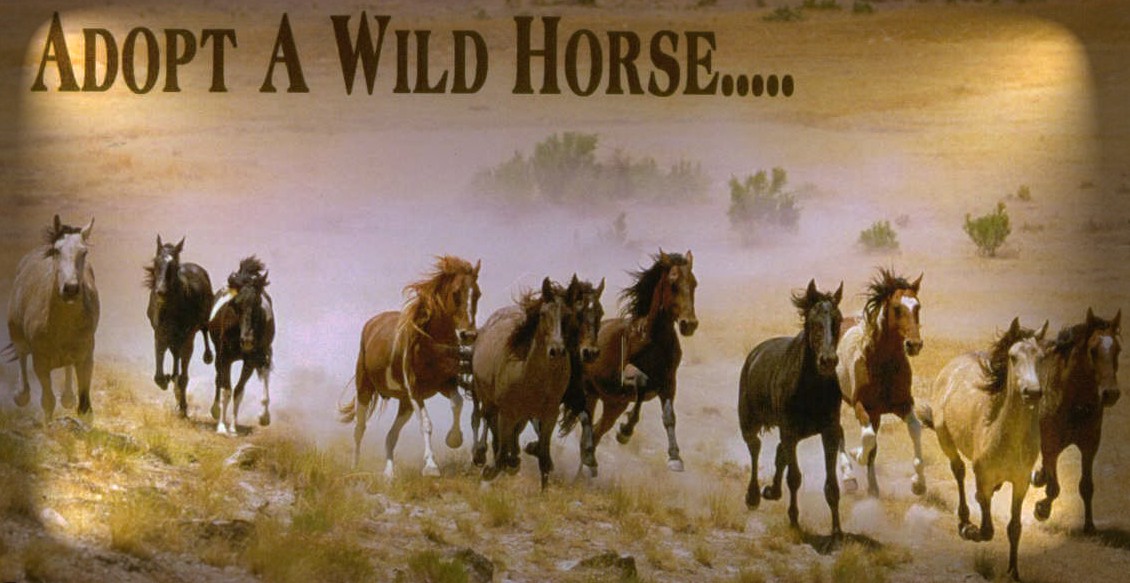
The other solution is a program started in 1973 called "Adopt-A-Horse." This has had some success and is the program I promote in my book, "In the Heart of a Mustang." Two problems with this, however, and why I think using PZP is necessary, is that, as noted above, there are already thousands of horses waiting for adoption and there simply aren't that many people qualified to adopt and train a wild horse.

There have been some success stories and great programs. The Chincoteague Ponies off the coast of Virginia have been stabilized using a combination of PZP and adoption. I realize it is a much smaller herd and a controlled environment, but it has worked for them.

Several programs have been developed that provide equine therapy for prisoners such as the Canyon City Prison Adoption Program (W.H.I.P) in Colorado and the Arizona Prison system Adoption Program.

But you don't have to be a convict or troubled youth to adopt! One organization that has promoted adoption is the Extreme Mustang Make-overs. They sponsor a contest each year in which trainers can adopt, train over a three month period, and sell, a mustang. For more information on their program go to their website: http://extrememustangmakeover.com/

You can also adopt right from the BLM. Go to this link: https://www.blm.gov/adoptahorse/

If you are interested in reading "In the Heart of a Mustang," a book that will touch your heart, go to the website: www.dancinghorsepress.com 
It is also available on Amazon and for Kindles.

Literary Classics Awards said of this book: "In the Heart of a Mustang is one of the finest books ever written for teens and pre-teens."

Wednesday, November 9, 2016

GOODREADS GIVEAWAY FOR THE STONE OF MERCY

Great News!
Goodreads.com is offering 3 free (as in really free!) copies of The Stone of Mercy. You must go to the link below and click on the box that says "Enter Giveaway" between November 9th and December 9th for a chance to win. It would make a great Christmas gift for yourself or a friend!

Click here: https://www.goodreads.com/book/show/31329421-the-stone-of-mercy?from_search=true