

My award-winning coming of age novel titled "In the Heart of a Mustang" was inspired by two things. First, I worked for several years for PATH International, the organization that trains and certifies riding instructors to be able to work with not only disabled and handicapped people but also with at-risk youth. I heard many stories about the healing power of horses for teens who were struggling with life's challenges. Second, I have always been fascinated by the wild mustangs that run on public lands in the west. So, I decided to research more about them. The result of these two events in my life is the book: "In the Heart of a Mustang."
I want to share with you some of the things I learned researching information about the wild mustangs.


The Native Americans began using these horses for transportation while hunting, moving and at war with one another. The early pioneers liked them for their stamina and their sturdiness. Since the earliest days of their domestication, mustangs have been cross-bred with other horses including thoroughbreds.
Because mustangs are descendants of escaped domesticated horses, the wildlife management agencies consider them to be "feral" rather than "wild." To protect these historic animals, congress passed the "1971 Wild and Free-roaming Horses and Burros Act." This act gives responsibility for the management, protection and study of "unbranded and unclaimed horses and burros on public lands" to the Bureau of Land Management and the Forest Service. This act has been revised and amended over the years but, basically, it established lands upon which the horses may roam freely and set the "Appropriate Management Level" (AML) for the size of the herds. The AML is set at 26,715.
The act was passed to protect the dwindling herds. Since then, the size of the herds has exploded. A herd (or band) of mustangs can double in size in just four years. Obviously, this results in serious problems. As of March 2015, there were more than 58, 150 on-range horses and burros and another 47,000 being kept at holding facilities hoping for adoption at a cost to the taxpayers of $43 Million per year.

Solutions are not easy to come by. There are conflicting interests for the land. Ranchers want to run sheep and cattle. Energy companies want to drill for gas and oil. Builders want to develop shopping centers and neighborhoods. The Highway division wants to build roads. In addition, several of the plots of land that have been set aside are not suitable for horses and they can not survive on it. Some plots of land have no water, others not enough forage.
As the herds get too large, what should be done? The law forbids the moving of large herds to land with smaller herds. So it isn't that easy.
Some people simply want nature to take its course...i.e.. Let the horses starve to death to decrease the herd size. I am not in favor of this solution.
Neutering stallions doesn't work for two reasons. First, it only takes one stallion to impregnate the whole herd. Second, it changes herd dynamics. Geldings become social outcasts.
The best two solutions, in my opinion, are using a mare contraceptive called PZP or PZP-22. These injections will work for a year or two respectively.
The other solution is a program started in 1973 called "Adopt-A-Horse." This has had some success and is the program I promote in my book, "In the Heart of a Mustang." Two problems with this, however, and why I think using PZP is necessary, is that, as noted above, there are already thousands of horses waiting for adoption and there simply aren't that many people qualified to adopt and train a wild horse.
There have been some success stories and great programs. The Chincoteague Ponies off the coast of Virginia have been stabilized using a combination of PZP and adoption. I realize it is a much smaller herd and a controlled environment, but it has worked for them.
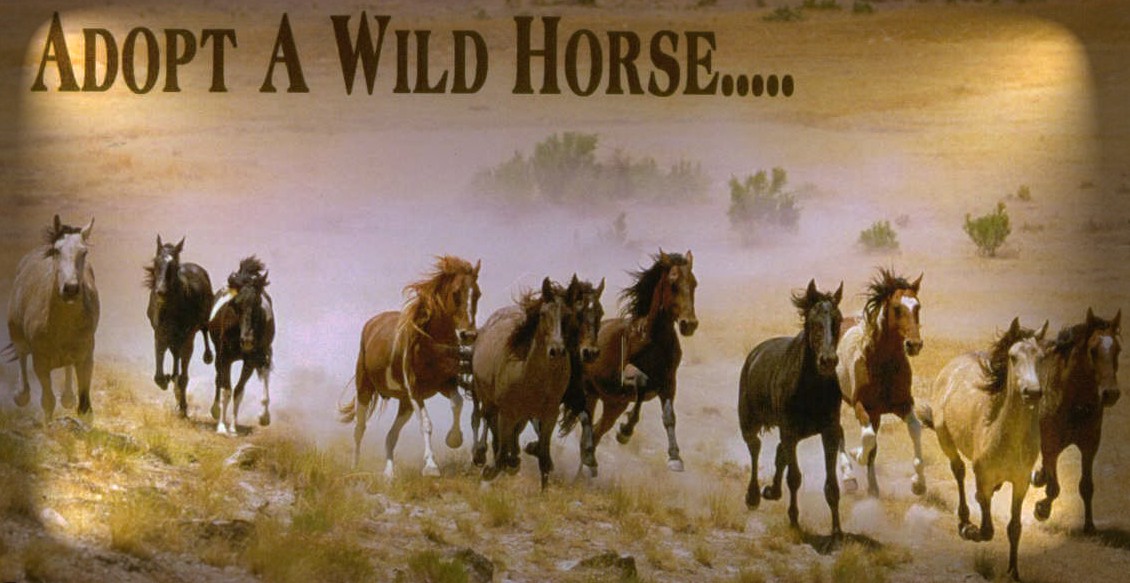
Several programs have been developed that provide equine therapy for prisoners such as the Canyon City Prison Adoption Program (W.H.I.P) in Colorado and the Arizona Prison system Adoption Program.
But you don't have to be a convict or troubled youth to adopt! One organization that has promoted adoption is the Extreme Mustang Make-overs. They sponsor a contest each year in which trainers can adopt, train over a three month period, and sell, a mustang. For more information on their program go to their website: http://extrememustangmakeover.com/
You can also adopt right from the BLM. Go to this link: https://www.blm.gov/adoptahorse/
If you are interested in reading "In the Heart of a Mustang," a book that will touch your heart, go to the website: www.dancinghorsepress.com
It is also available on Amazon and for Kindles.
Literary Classics Awards said of this book: "In the Heart of a Mustang is one of the finest books ever written for teens and pre-teens."


